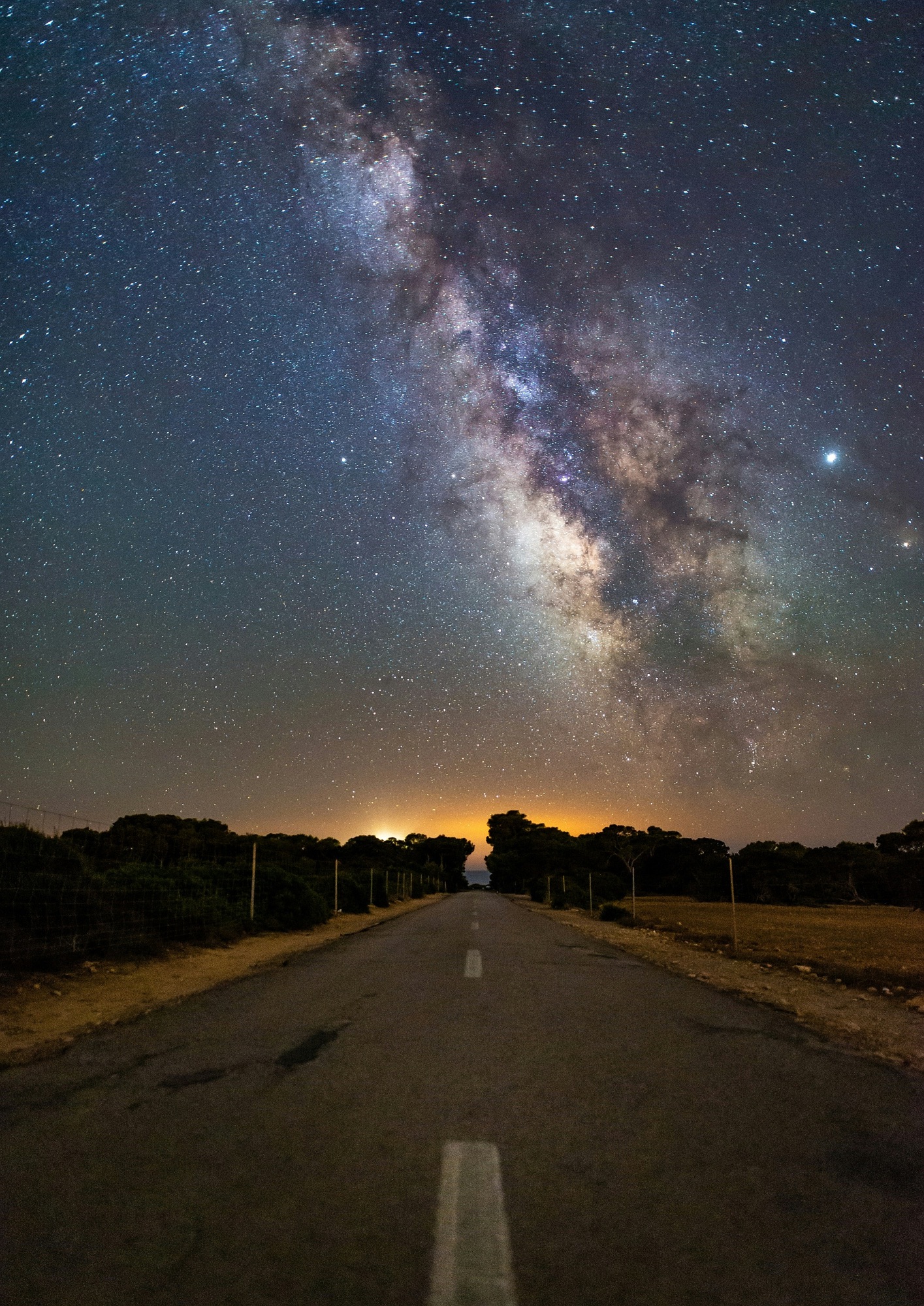

Exploring the outer world

John stood on the barren, rust-colored surface of Mars, feeling the weight of the momentous journey he had undertaken. The year was 2037, and after nearly a decade of intense training, countless simulations, and a seven-month voyage through the void of space, he had finally arrived. He was part of the first manned mission to Mars, an international endeavor to explore the Red Planet and lay the groundwork for future colonization.

As he gazed at the Martian horizon, John recalled the years of preparation. He remembered the excitement of being selected for the mission, the rigorous physical and mental training, and the countless hours spent in isolation chambers to simulate the long journey. The launch itself had been a mix of exhilaration and terror as the rocket roared to life, carrying him away from everything he had ever known.

Now, standing on this alien world, the reality of his situation was both awe-inspiring and daunting. The landscape stretched out in all directions, a vast expanse of rocky plains and towering mountains, under a salmon-pink sky. The air was thin and unbreathable, necessitating the bulky suit that encased his body, providing life-sustaining oxygen and protection from the harsh environment.

John’s mission was multifaceted. He and his team were to conduct experiments, search for signs of past or present life, and test new technologies for use in future missions. Each day was meticulously planned, from setting up solar panels to deploying rovers and scientific instruments. They lived in a habitat module, a marvel of engineering that provided a relatively comfortable living space, complete with sleeping quarters, a small kitchen, and a lab.

One day, while out on an EVA (extravehicular activity), John and his colleague, Dr. Elena Martinez, made a discovery that would change everything. They had been exploring a series of underground lava tubes when their instruments picked up an unusual signal. Following the signal deeper into the caverns, they stumbled upon what appeared to be ancient microbial fossils embedded in the rock.

The discovery sent shockwaves through the scientific community back on Earth. Proof of past life on Mars would have profound implications for our understanding of life in the universe. As they meticulously documented their findings, John couldn’t help but feel a deep sense of connection to the explorers of Earth’s past, those who had ventured into the unknown and expanded the boundaries of human knowledge.

As the months passed, John and his team continued their work, sending back a wealth of data that would keep scientists busy for years to come. They faced challenges, of course—equipment failures, dust storms, and the psychological strain of isolation—but their resolve never wavered. They knew they were pioneers, laying the groundwork for a future where humans might one day call Mars home.

When the time came to leave, John felt a pang of sadness. Despite the harsh conditions, Mars had become a second home. As the rocket lifted off, carrying them back towards Earth, he took one last look at the receding planet. It had been a journey of discovery, both external and internal, and he knew that the experience had changed him forever.

Upon their return, John and his team were hailed as heroes. Their discoveries had reignited public interest in space exploration and inspired a new generation of scientists and explorers. As he stood before a cheering crowd, John couldn’t help but think of the future, of the day when humans would return to Mars—not as visitors, but as settlers, ready to build a new chapter in the story of humanity.

A good parenting is all about shine.

In the small, sunlit town of Brooksville, there lived a family known for their remarkable warmth and unity. The Brooks family consisted of Anna, the nurturing mother, Jack, the wise father, and their two children, Emma and Sam. Anna and Jack had always believed that good parenting was the foundation of a happy and successful life for their children, and they made it their mission to create a loving and supportive environment for Emma and Sam.

One summer evening, as the golden rays of the setting sun filtered through the curtains, Anna sat down with Emma and Sam at the kitchen table. They were preparing for a special family tradition: the weekly “gratitude circle.” Each member of the family would share something they were grateful for, fostering a sense of appreciation and positivity.

Emma, a thoughtful and curious twelve-year-old, was the first to speak. “I’m grateful for the way Mom and Dad always listen to us,” she said with a smile. “Even when they’re busy, they make time to hear about our day.”

Anna and Jack exchanged a knowing glance. They had always made it a priority to be present in their children’s lives, understanding that being heard was one of the most important gifts they could give.

Next, it was Sam’s turn. At eight years old, he was energetic and imaginative. “I’m grateful for our adventures,” he exclaimed. “Like when we went camping last weekend and Dad taught us how to make s’mores!”

Jack chuckled, remembering the joy on his children’s faces as they toasted marshmallows over the campfire. He knew that these moments of shared experiences were what built strong, lasting bonds.

When it was Anna’s turn, she said, “I’m grateful for how kind you both are to each other and to others. It makes me proud to see you grow into such wonderful people.”

Jack added, “And I’m grateful for our family, for the love and respect we have for one another. It’s what makes us strong.”

As the weeks passed, the Brooks family continued to embrace their values of love, respect, and open communication. When Emma struggled with a difficult math problem, Anna patiently worked through it with her, teaching her not just the solution, but the importance of perseverance. When Sam wanted to quit his soccer team after a tough loss, Jack shared stories of his own childhood challenges, encouraging Sam to keep trying and learn from his experiences.

One autumn afternoon, Emma and Sam decided to surprise their parents with a special project. They spent hours crafting a scrapbook filled with photos, drawings, and little notes expressing their love and gratitude. When they presented it to Anna and Jack, the parents were moved to tears.

“This is the most beautiful gift,” Anna said, hugging her children tightly. “It shows us that the love and care we’ve given you is growing in your hearts too.”

Jack added, “We are so proud of you both. This scrapbook will be a treasured reminder of our wonderful family moments.”

The Brooks family’s story spread through Brooksville, inspiring other parents to adopt similar practices of love, respect, and gratitude. Anna and Jack’s dedication to their children showed that good parenting wasn’t about being perfect, but about being present, supportive, and loving.

And so, in the warm embrace of their family home, surrounded by love and laughter, Emma and Sam flourished, carrying forward the values and lessons instilled by their parents. The Brooks family remained a shining example of how good parenting could create a strong, happy, and resilient family.

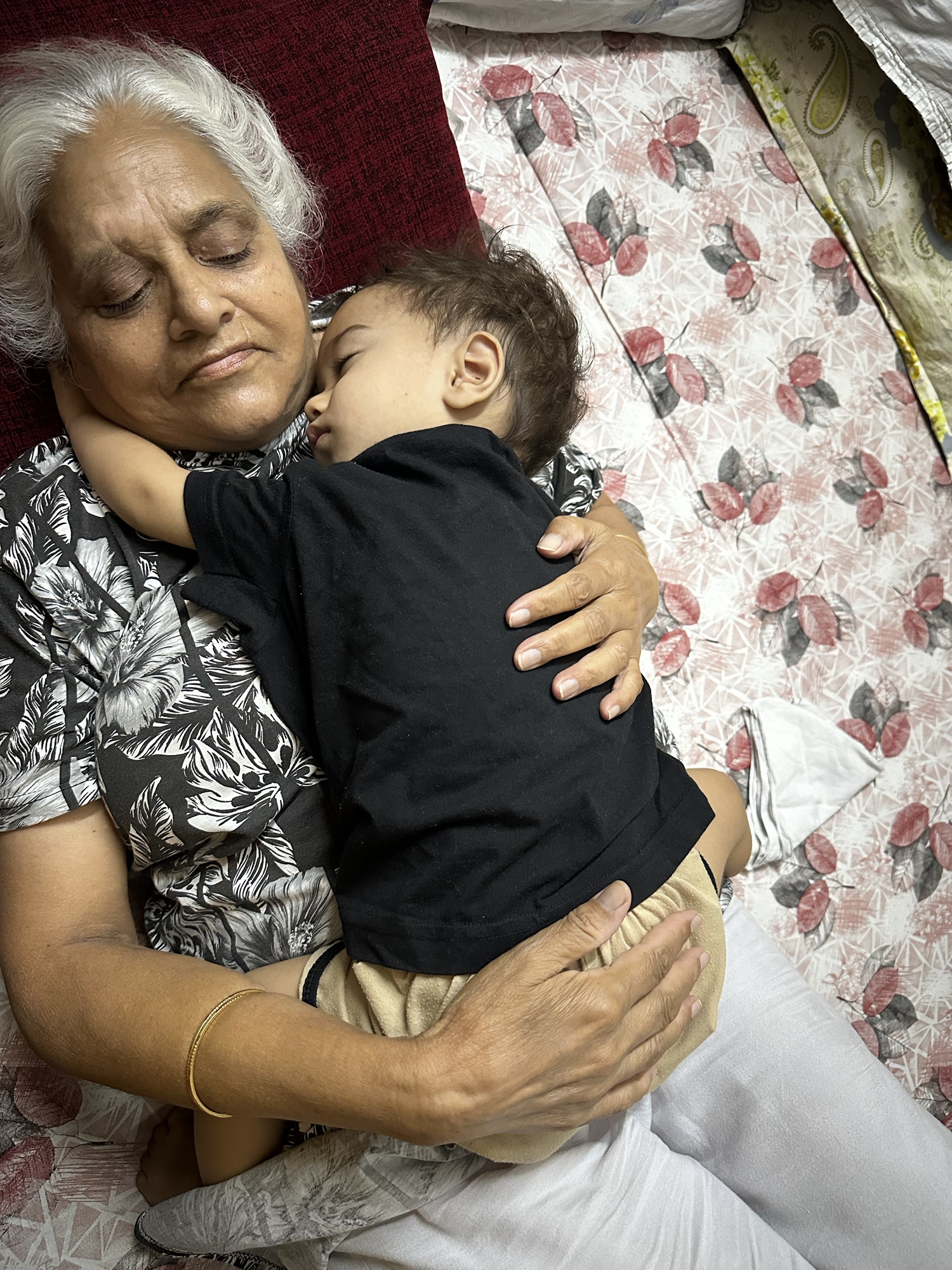
Bond between Grand mother and Grand child.

This image captures a tender moment between an elderly woman and a young child, presumably her grandchild, as they rest together. The child is sleeping peacefully on the woman’s chest, while the woman gently holds the child in a loving embrace. The background includes a floral-patterned bedspread and a comfortable setting, adding to the serene and affectionate atmosphere of the scene.

Phone that Time Travelled into the year 1800.

In the year 1800, in a quaint village nestled in the English countryside, lived a man named Thomas. Thomas was a blacksmith, known for his strong hands and kind heart. His days were filled with the rhythmic clang of hammer on anvil, shaping metal into tools and horseshoes. Life was simple, and Thomas was content with his routine.

One foggy morning, while collecting firewood in the dense forest near his home, Thomas stumbled upon something peculiar. Amidst the fallen leaves and twigs lay a small, sleek object. It was unlike anything he had ever seen. Curiosity piqued, he picked it up and examined it closely. It was rectangular, flat, and had a smooth glass surface. He noticed a single button on the side and, upon pressing it, was startled as the object lit up with vibrant colors.

Thomas had found a cell phone.

He turned the device over in his hands, marveling at its smoothness and the strange symbols on the screen. He pressed the button again, and the screen displayed a series of icons. One of them, an image of a telephone receiver, seemed familiar. Tentatively, he tapped it and was even more astonished when a list of names appeared. He scrolled through the list, each name accompanied by a small image.

Perplexed but fascinated, Thomas decided to show the strange device to his friend, Dr. Edward, the village physician and the most educated man he knew. Edward was equally baffled. They spent hours examining the device, trying to decipher its purpose and origin. Edward hypothesized that it might be a communication device from a distant future, a theory that seemed absurd yet strangely plausible given the object’s advanced nature.

As days passed, Thomas and Edward experimented with the phone. They discovered the camera function and were amazed by the ability to capture and view images instantly. They also found a map application, which displayed their village and the surrounding areas with incredible accuracy. However, they were careful to keep the device a secret, fearing it might cause panic or be deemed witchcraft by the superstitious villagers.

One evening, as Thomas sat by the fireplace, he received a call. The phone buzzed and a name appeared on the screen: “Sarah.” Heart pounding, he answered the call and heard a voice, clear and distant, saying, “Hello? Who is this?” Thomas, bewildered, replied, “This is Thomas. Who are you?” There was a pause before the voice responded, “This is Sarah. Where are you calling from?”

Thomas and Sarah talked for a while, trying to make sense of their situation. Sarah explained that she was from the year 2024 and had lost her phone during a hiking trip. She was equally shocked to learn that her phone had somehow traveled back in time to 1800. They spoke about their respective worlds, sharing stories and marveling at the differences. Sarah promised to find a way to retrieve her phone and instructed Thomas to keep it safe.

Over the next few weeks, Thomas and Sarah communicated regularly. Their conversations became a window into another world for Thomas, who learned about the incredible advancements of the future. He was fascinated by tales of automobiles, airplanes, and the vast network of information called the internet. Sarah, in turn, was charmed by Thomas’s descriptions of his simple, yet fulfilling life in the village.

One day, as Thomas was working in his forge, the phone buzzed with a message from Sarah. She had found a way to bring the phone back to her time. Thomas felt a pang of sadness at the thought of losing this connection to the future, but he knew it was the right thing to do.

That night, under a full moon, Thomas followed Sarah’s instructions. He placed the phone in the exact spot where he had found it and waited. As dawn broke, the phone began to glow, and with a flash of light, it disappeared, leaving Thomas alone with his thoughts.

Though the device was gone, Thomas felt a profound sense of gratitude for the experience. The glimpses into the future had broadened his perspective, and he carried the memory of his conversations with Sarah like a cherished secret. Life in the village continued as before, but Thomas was changed. He approached each day with a renewed sense of wonder, knowing that somewhere, in a distant future, he had a friend named Sarah who would remember him too.

A Cold Winter Night

The city was wrapped in a thick, silent blanket of snow. The night air was sharp, biting at the cheeks of those brave enough to step outside. Streetlights cast a warm, amber glow, their light reflected by the glistening ice that coated every surface. The sidewalks were mostly empty, save for a few hardy souls bundled in thick coats and scarves, their breath visible in the frosty air.

In one corner of the city, a small café remained open, its windows fogged from the warmth inside. The bell above the door tinkled softly as people came and went, seeking refuge from the cold. Inside, the scent of freshly brewed coffee mingled with the sweet aroma of baked goods. The hum of quiet conversation filled the air, a comforting contrast to the stillness outside.

By the window, an old man sat alone at a table, his hands wrapped around a steaming mug. He watched as snowflakes danced in the light from the streetlamp, each one unique, each one beautiful. His mind wandered to winters past, to memories of laughter and love, to a time when the world seemed a bit warmer.

At the counter, the barista, a young woman with a friendly smile, served a customer their drink. Her eyes sparkled with the kind of warmth that could chase away even the coldest of nights. She noticed the old man by the window and, after a moment’s hesitation, prepared another mug of hot chocolate. She carried it over and placed it gently on the table in front of him.

“This one’s on the house,” she said softly. “It’s too cold a night to sit with just one drink.”

The old man looked up, surprise and gratitude in his eyes. “Thank you,” he replied, his voice a little hoarse. He hadn’t expected kindness on a night like this.

She nodded, giving him a small, understanding smile before returning to her post. The old man took a sip of the hot chocolate, feeling its warmth spread through him. He looked around the café, at the people who had gathered there: a couple sharing a slice of cake, a group of friends laughing over their mugs, a solitary writer tapping away at their laptop. Despite the cold outside, there was a sense of community within these walls, a shared understanding that they were all in this together.

As the night wore on, the snow continued to fall, covering the city in a pristine white blanket. The café remained a beacon of warmth and light, a refuge from the harsh winter night. And in that small corner of the world, people found comfort in each other’s presence, a reminder that even in the coldest of times, there is warmth to be found.

Black Peak Mountain

Nestled in the heart of a desolate forest, Black Peak Mountain stood like a towering sentinel, its jagged peaks clawing at the sky. For centuries, the locals whispered about the malevolent spirits that dwelled within its shadowy crevices, and the unexplainable disappearances of those who dared to venture too close. Despite the warnings, the allure of uncovering the mountain’s dark secrets was too tempting for some.

One fateful autumn, a group of four friends, lured by tales of hidden treasures and ancient curses, decided to embark on an expedition to Black Peak. There was Amelia, the intrepid leader whose fascination with the occult bordered on obsession; Mark, the skeptic whose rational mind dismissed the supernatural; Claire, the sensitive artist who often felt the presence of the unseen; and Jake, the adventure-seeker always craving the next thrill.

As they approached the base of the mountain, a thick fog rolled in, veiling the landscape in an eerie silence. The only sound was the crunch of their boots against the gravel path. The air grew colder, and the forest seemed to hold its breath, watching.

Undeterred, the group set up camp just before dusk. Around the fire, Amelia read from an old, leather-bound journal she had acquired from a local antique shop. It spoke of a hidden cavern at the mountain’s summit, filled with unimaginable riches but guarded by an ancient evil. The firelight cast flickering shadows that danced menacingly on the faces of the friends as they listened in a mix of intrigue and dread.

That night, Claire was the first to experience the mountain’s malevolence. She woke with a start, her heart pounding. In the dim light of the dying fire, she saw a figure standing at the edge of the camp. Its eyes glowed with a cold, blue light, and its form seemed to flicker like a mirage. Paralyzed with fear, Claire watched as it slowly lifted a skeletal finger to its lips, signaling her to remain silent. Then, it vanished into the darkness.

The next morning, Claire recounted her experience, but Mark scoffed. “It was just a dream,” he said. “This place is playing tricks on your mind.” Amelia, however, was intrigued. She believed Claire had seen one of the guardians described in the journal.

As they ascended the mountain, the atmosphere grew increasingly oppressive. The trees twisted into grotesque shapes, and the very ground seemed to ooze with a dark, oily substance. By midday, they reached a narrow, winding path that led to the summit. The path was flanked by stone statues, worn by time but still exuding a sinister presence.

Halfway up, they encountered a cave. Inside, the air was thick with the stench of decay. The walls were lined with cryptic symbols that seemed to pulse with an otherworldly energy. Amelia, undeterred, pressed on, feeling drawn deeper into the cavern’s depths.

Suddenly, a deafening roar echoed through the cave, and the ground trembled. The walls began to close in, as if the mountain itself were alive and intent on trapping them. In the chaos, Jake was separated from the group. Panicked, he stumbled through the darkness, his flashlight flickering. He could hear his friends calling out, their voices growing fainter with each passing second.

Then, he saw it—a grotesque, shadowy figure with eyes that burned like embers. It moved with unnatural speed, closing the distance between them in an instant. Jake’s scream was cut short as the figure enveloped him in darkness.

The remaining three, desperate to escape, followed the symbols on the walls, hoping they would lead them out. They stumbled upon a chamber, its walls covered in gold and jewels. In the center lay an ancient, ornate chest. Amelia, her curiosity piqued, reached for it. As she touched the chest, a violent wind whipped through the chamber, extinguishing their lights.

In the pitch black, they heard whispers—voices chanting in a language long forgotten. The temperature plummeted, and icy hands seemed to grasp at their limbs. Mark, ever the skeptic, shouted for it to stop, but his voice was swallowed by the darkness.

When the lights flickered back on, the chamber was empty, save for Claire. She stood alone, her friends vanished, the chest untouched. Terrified, she fled the mountain, never looking back.

Years later, the story of the expedition became another cautionary tale told by the locals. Black Peak Mountain remained shrouded in mystery, its secrets guarded by the ancient evil that dwelled within. And those who listened closely on quiet nights could still hear the faint, haunting whispers of the lost.

The fate of Caelum City

The city of Caelum was once a bustling metropolis renowned for its towering spires and vibrant marketplaces. Situated at the edge of a vast, serene lake, Caelum was a beacon of prosperity and innovation. Its people thrived on the trade routes that converged upon its docks, and the city’s scholars made groundbreaking advances in science and art.

However, despite its prosperity, Caelum’s fate was sealed by the very waters that had once brought it wealth. Legends spoke of an ancient pact made between the city’s founders and the lake spirit, Naia. In exchange for boundless prosperity, the city would honor the spirit with annual festivals and sacrifices. Over the centuries, as generations passed and the city grew more powerful, the old ways were forgotten, and Naia was neglected.

Without warning, the waters of the lake began to rise. At first, it was a gradual encroachment, small enough to be dismissed as a seasonal anomaly. But as the weeks turned into months, the waters climbed higher, swallowing the lower parts of the city. Panic spread through Caelum as the inhabitants watched their homes and livelihoods disappear beneath the murky depths.

The city’s leaders, desperate to save their home, consulted the few remaining scholars who still studied the ancient texts. They learned of the forgotten pact and realized that their negligence had angered Naia. A council was convened, and the people decided to hold a grand festival to appease the lake spirit. They offered rich sacrifices, beautiful performances, and heartfelt prayers.

For a moment, it seemed the waters stopped rising. Hope blossomed in the hearts of Caelum’s citizens. But their reprieve was short-lived. Naia’s anger had grown too great, and the temporary halt was merely a calm before the storm. The waters surged with renewed fury, engulfing the city with terrifying speed. Buildings crumbled, and streets became rivers as the lake claimed what had been promised to it centuries ago.

In the final days, the people of Caelum scrambled to save themselves. Many fled to the hills, while others built makeshift rafts. As the water reached the highest towers, the last remaining residents watched in sorrow as their beloved city disappeared beneath the waves. The once-great metropolis was lost, leaving only memories and the haunting whispers of what had been.

Years passed, and Caelum became a legend, a cautionary tale told by those who lived near the vast lake. Fishermen and travelers spoke of seeing ghostly towers beneath the water’s surface on calm, moonlit nights. The lake itself was still called Caelum, in memory of the city that drowned within it.

And so, the name of the city lived on, not in the bustling streets or grand marketplaces, but in the waters that had claimed it. The lake, now called Caelum, served as a reminder of the fragile balance between nature and civilization, and the ancient pacts that should never be forgotten.

Raj the relentless hard working boy from a village

In a quaint village nestled between rolling hills and verdant fields, lived a boy named Raj. His life was simple, revolving around school, chores, and playing with his friends. Despite the modest means of his family, Raj’s parents instilled in him a deep sense of hard work, integrity, and a relentless thirst for knowledge. His mother often told him, “Education is the key to a brighter future, Raj.”

Raj’s school was a small, one-room building where a single teacher taught children of all ages. Raj stood out with his keen intellect and insatiable curiosity. His teacher, Mr. Sharma, noticed Raj’s potential and took a special interest in him, lending him books and encouraging him to dream beyond the boundaries of their village.

One day, a letter arrived from the city, offering Raj a scholarship to attend a prestigious high school. The scholarship was a rare opportunity, but it meant leaving behind his family and the only life he had ever known. With mixed emotions, Raj accepted the offer, driven by the desire to fulfill his parents’ dreams and his own aspirations.

The city was a dazzling, overwhelming maze of noise, lights, and endless activity. Initially, Raj felt like a fish out of water, struggling to adapt to the fast-paced life and rigorous academic demands. But he remembered his parents’ words and Mr. Sharma’s faith in him. Determined not to let them down, he immersed himself in his studies, often burning the midnight oil.

His perseverance paid off. Raj excelled in his studies, earning top grades and the respect of his peers and teachers. He developed a keen interest in engineering, inspired by the city’s towering buildings and intricate infrastructure. With unwavering determination, Raj secured a place at one of the country’s top engineering colleges.

College life was a whirlwind of lectures, projects, and exams. Raj faced numerous challenges, from tough coursework to financial constraints. But his village upbringing had taught him resilience. He took up part-time jobs, tutored other students, and applied for every scholarship and grant available.

After years of hard work and sleepless nights, Raj graduated with honors. He was offered a position at a leading engineering firm, where his innovative ideas and relentless work ethic soon caught the attention of his superiors. Raj worked his way up the ranks, eventually leading major projects and transforming the skyline of the city he once found so intimidating.

Despite his success, Raj never forgot his roots. He regularly sent money home to support his family and invested in the development of his village. He funded the construction of a new school building, provided scholarships for talented students, and brought modern amenities to the community.

Years later, Raj returned to his village, not as the boy who left with dreams in his eyes, but as a successful man who had turned those dreams into reality. The villagers gathered to celebrate his achievements, and Mr. Sharma, now retired, beamed with pride.

Standing before the community that had nurtured him, Raj spoke with heartfelt emotion, “Everything I have achieved began with the lessons I learned here—hard work, integrity, and the power of education. No matter where life takes you, never forget where you come from.”

Raj’s journey from a village boy to a successful city engineer became a beacon of hope and inspiration for many. His story proved that with determination, perseverance, and a solid foundation of values, even the most modest beginnings could lead to extraordinary achievements.

The Davidson Family

The evening sun dipped low, casting long shadows across the endless ribbon of asphalt. The Davidson family—Jack, his wife Karen, and their two children, Lily and Max—were on their way to a long-anticipated vacation in the mountains. The GPS had guided them off the main interstate, promising a shortcut through scenic backroads. But as the sun set and the road became less familiar, unease crept into the car.

The road, once bustling with other travelers, now stretched empty before them, flanked by dense forests on either side. Jack glanced at the GPS screen, its once clear and confident directions now replaced with a swirling loading icon. “Must be a dead zone,” he muttered, more to himself than anyone else.

Karen turned to him, concern etched on her face. “Should we turn back?”

Jack shook his head. “No, we’ve come too far. We should hit a main road soon enough.”

Lily and Max, seated in the back, were unusually quiet. Even their tablets, now out of signal range, offered no distraction. Max, the younger of the two, looked out the window at the encroaching darkness. “Dad, are we lost?”

“No, buddy,” Jack replied, forcing a smile. “We’re just taking the scenic route.”

Minutes turned to an hour, and the anxiety in the car thickened. The headlights cut through the darkness, revealing little more than trees and occasional road signs, their messages cryptic and unfamiliar. Karen’s phone showed no service, and even the car radio only emitted static.

Then, as if conjured by their growing desperation, a small gas station appeared on the horizon, its lone light a beacon in the night. Jack pulled in, the car crunching over gravel. The station seemed old, almost forgotten, with a single pump and a dimly lit shop.

Jack got out, stretching his legs and motioning for the others to stay put. He approached the shop, its glass door creaking as he opened it. Inside, an elderly man with a weathered face stood behind the counter, reading a yellowed newspaper.

“Evening,” Jack said, trying to keep his voice steady. “We’re a bit turned around. Can you point us back to the main road?”

The man looked up slowly, his eyes sharp despite his age. “Ain’t many folks come this way after dark,” he said in a gravelly voice. “You’re far from any main road. Best bet is to head back the way you came, but even that ain’t a guarantee.”

Jack’s heart sank. “Is there anywhere we can stay for the night? Somewhere close?”

The old man thought for a moment, then nodded. “There’s an old motel about ten miles down. It’s not much, but it’s a place to rest.”

Grateful for any help, Jack thanked him and returned to the car. “There’s a motel a bit further ahead,” he told Karen. “We can stop there for the night.”

The family continued down the dark highway, the gas station’s light soon swallowed by the night. The road seemed to stretch on forever, each mile blending into the next. Finally, a flickering neon sign for the “Midway Motel” came into view, its letters partially burnt out.

The motel was as the old man had described—barely more than a relic of better days. But it was a place to sleep. They checked in, the night manager barely acknowledging their presence, and soon they were settled into a small, musty room.

As the family drifted off to sleep, the unease of the journey lingered. Jack lay awake, staring at the ceiling, listening to the distant sounds of the highway. In the morning, they’d try again, hopefully with better luck and a clearer path.

But for now, they were together, safe, and off the road. And that was enough.

Is this your new site? Log in to activate admin features and dismiss this message
Log In